Don Lemon and the Collapse of a CNN Mainstay
For years, Don Lemon was one of CNN’s most recognizable faces, known for his emotional delivery, blunt commentary, and willingness to confront controversial topics directly on air. But that same outspokenness eventually became part of the problem. In the final stage of his career at the network, Lemon became increasingly tied to heated on-air clashes and comments that generated backlash far beyond the newsroom. One of the biggest controversies came after remarks about politician Nikki Haley being “past her prime,” a statement many viewers considered deeply sexist and dismissive. Combined with visible friction between Lemon’s style and CNN’s newer management direction, the situation reached a breaking point in 2023. His departure marked more than the end of a long tenure—it symbolized the growing conflict between personality-driven broadcasting and a corporate desire for controlled, controversy-free news presentation.
Piers Morgan’s Exit After Meghan Markle Backlash
Piers Morgan built much of his public career on confrontation, provocation, and a refusal to soften his opinions for critics. That style kept him in the spotlight for years, but it also set the stage for one of the most dramatic exits in British television. After Prince Harry and Meghan Markle’s explosive Oprah interview, Morgan repeatedly challenged Meghan’s claims on air, openly casting doubt on her account of emotional suffering and mistreatment. The backlash was immediate and enormous, with tens of thousands of complaints flooding regulators and public pressure intensifying by the hour. Matters escalated further when his co-host confronted him directly during the broadcast, exposing the personal tone behind his repeated attacks. Morgan stormed off set in a moment that instantly became television history. Whether described as a resignation or a forced departure, the episode showed how even a presenter built on controversy can reach a point where the outrage becomes too large for a network to manage.
The Reckoning That Brought Down Matt Lauer and Charlie Rose
Some of the most shocking falls in broadcast journalism did not come from one awkward slip or one bad segment, but from allegations that shattered carefully built public identities. Matt Lauer had spent decades as the trusted face of morning television, projecting warmth, polish, and stability into millions of homes. Charlie Rose, meanwhile, had built a reputation as a serious interviewer whose calm style attracted presidents, celebrities, and intellectuals. Yet both careers collapsed with stunning speed after allegations of misconduct surfaced in 2017. The accusations transformed each man almost overnight from highly respected media institution to symbol of abuse of power in elite newsrooms. Networks moved swiftly, removing them from programming and distancing themselves from their legacies. Their downfalls became defining examples of how public prestige can disappear instantly when behind-the-scenes behavior is exposed, especially in an industry forced to confront long-ignored patterns of misconduct.
When On-Air Mistakes Became Career-Defining Disasters
Live television has always been unforgiving, and a few broadcasters learned that lesson in the harshest possible way. Natasha Axelby’s brief moment of distraction with a pen turned into a viral clip that made her look unprepared in front of an entire national audience. AJ Clemente’s first appearance as an anchor became his last after he unknowingly uttered profanity just as the broadcast went live. Other figures faced career damage for even more serious judgment failures, including reporters whose insensitive actions or inaccurate live reporting overshadowed their professional intentions. These moments spread so quickly online that there was no chance to contain the embarrassment. In the age of viral clips, a few seconds of human error can define a journalist more powerfully than years of hard work. The public may laugh, sympathize, or argue over whether the punishment was too harsh, but for the people involved, the consequences can be permanent.
Anchors Who Defied the System and Paid the Price
Not every career collapse came from scandal alone—some came from conflict with the very organizations that employed them. Mark Mester’s emotional defense of his longtime co-anchor during a live KTLA segment resonated with viewers who saw it as loyalty and authenticity, but management viewed it as rebellion. Ed Schultz likewise framed his firing as the result of refusing to follow editorial pressure, believing he was being punished for trying to cover a political movement he felt mattered to working people. In both cases, the journalists positioned themselves as truth-tellers standing against corporate media control, while their employers treated them as liabilities who had crossed professional boundaries. These stories reveal a deeper tension in television news: anchors are often encouraged to appear genuine and passionate, but only within limits that do not challenge management authority. Once that line is crossed, even popular figures can be removed with startling speed.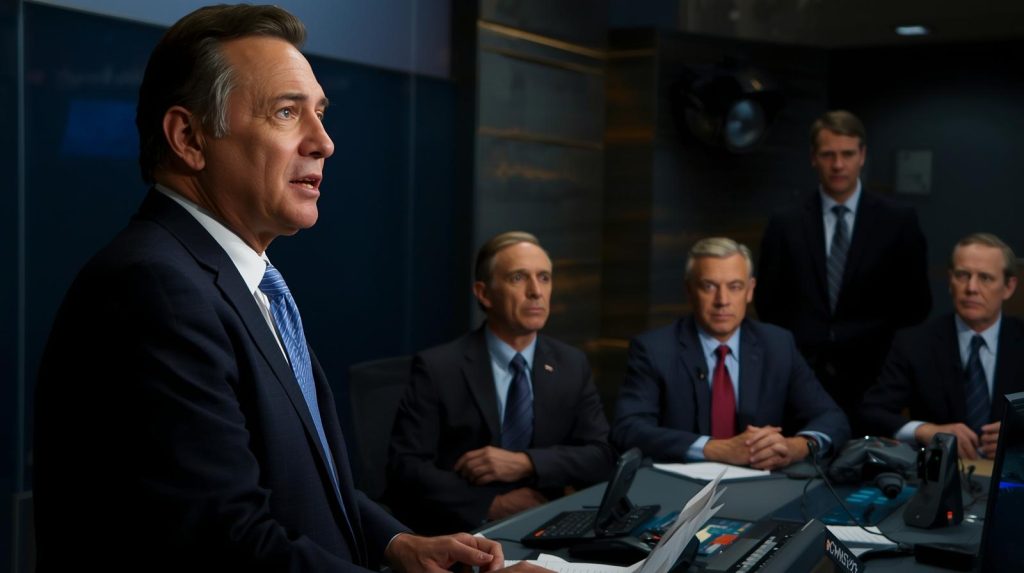
Hot Mics, Off-Camera Rage, and the End of Carefully Managed Images
Some of the most humiliating media downfalls happened not during polished segments, but in the moments broadcasters thought were private. Ken Rosato’s long career reportedly ended after an offensive comment was picked up by a microphone. Vic Faust saw his reputation collapse when an off-air tirade filled with aggression and insults became public. Jeffrey Toobin’s infamous Zoom-call scandal showed how digital-era workplace mistakes can spread instantly and permanently stain a once-respected name. Rick Sanchez also self-destructed with comments made outside the formal broadcast setting, proving that the line between public and private speech had all but disappeared for television personalities. These incidents exposed a brutal truth about modern media: an anchor’s image is no longer protected once the segment ends. In an era of hot mics, leaked audio, recorded meetings, and instantly shared clips, a career can be destroyed by the words spoken when someone thinks the audience is no longer listening.
The New Reality of Broadcast Fame: One Moment Can End Everything
Taken together, these cases reveal how unstable modern television careers have become, even for people who appear powerful, polished, and untouchable on screen. Some lost their jobs because of offensive remarks, others because of ethical failures, misconduct allegations, emotional outbursts, or moments of breathtaking bad judgment. A few were brought down by culture-war controversies, while others became examples of how social media can magnify a single image or sentence into a career-ending scandal within hours. What unites them all is the speed of the fall. Broadcast journalism depends heavily on credibility, composure, and trust, and once any of those cracks become visible, the damage can move faster than a network can contain. These public downfalls are not just stories about embarrassment—they are reminders that in live media, every second matters, every word can be captured, and every mistake may become the one the audience remembers forever.