The Night One Mistake Nearly Destroyed Everything
By 2015, Steve Harvey had already conquered stand-up comedy, radio, daytime television, and game shows, becoming one of the most recognizable entertainers in America. Hosting the Miss Universe pageant in Las Vegas should have been another milestone in a career filled with unlikely victories. Instead, it became one of the most painful public mistakes of his life. When Harvey mistakenly announced Miss Colombia as the winner instead of Miss Philippines, the error instantly became global humiliation on live television. What made the moment even more brutal was not just the mistake itself, but the decision he made afterward. Rather than hiding backstage and letting producers handle the fallout privately, he walked back out in front of the world and admitted the truth. The backlash was merciless, with public ridicule, threats, and intense scrutiny following him immediately. Yet this moment also revealed something essential about Steve Harvey’s character. Beneath the polished suits and comic timing was a man who had already lived through far worse than embarrassment, a man whose life had been shaped by hardship long before fame ever found him.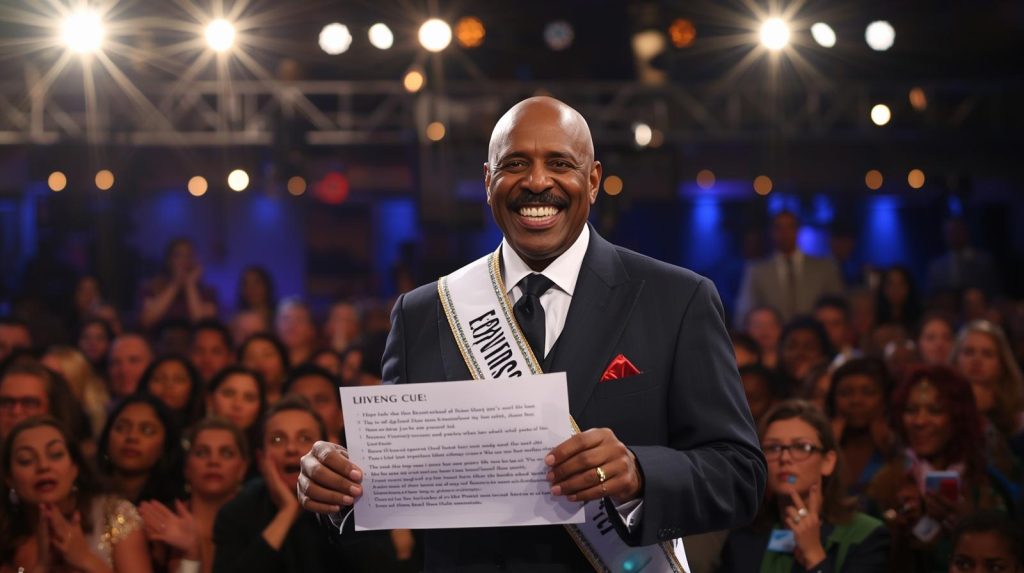
The Boy With a Stutter and a Dream No One Respected
Long before he became a television icon, Steve Harvey was Broderick Stephen Harvey, a boy born in Welch, West Virginia, to a coal miner father and a deeply faithful mother. His early life was marked not by confidence, but by struggle, especially because he suffered from a severe stutter that made everyday speech humiliating. The boy who would later become famous for talking fast, thinking fast, and making entire rooms explode with laughter once had trouble getting through basic words without being mocked. His classmates laughed, neighborhood kids taunted him, and the shame of not being able to speak freely followed him everywhere. The emotional wound deepened in sixth grade when a teacher asked students what they wanted to be when they grew up. Steve wrote that he wanted to be on television, and instead of encouraging him, the teacher ridiculed him publicly, telling him that a Black boy from West Virginia who could barely talk had no business dreaming of television. It could have crushed him permanently, but his father refused to let that happen. He told Steve to keep that paper and look at it every day, planting in him the stubborn belief that other people did not get to define his future.
The Three Years Steve Harvey Lived in a Car
Steve Harvey’s success story becomes truly staggering when you understand how close he came to disappearing completely. After drifting through college, factory work, sales jobs, and other dead ends, he discovered stand-up comedy in the mid-1980s and immediately felt that he had found his purpose. But purpose did not pay the bills. He quit his job, his marriage began collapsing under the strain, and before long he found himself homeless, with no stable income and nowhere to sleep except inside a car. For three brutal years, Harvey lived as a ghost on the American highway, surviving from one gig to the next with almost no money and no certainty that the next town would be any better. He kept an ice chest in the car as a makeshift refrigerator, washed in gas station bathrooms, and wore a suit at night so he could step onto comedy stages looking like a professional while privately living in desperation. The contradiction was almost unbearable. He could make a room full of strangers laugh for forty-five minutes, then return alone to a freezing car, hungry and exhausted, wondering whether he had ruined his life chasing a dream. Those years were not romantic struggle; they were survival, humiliation, and pain at the rawest level.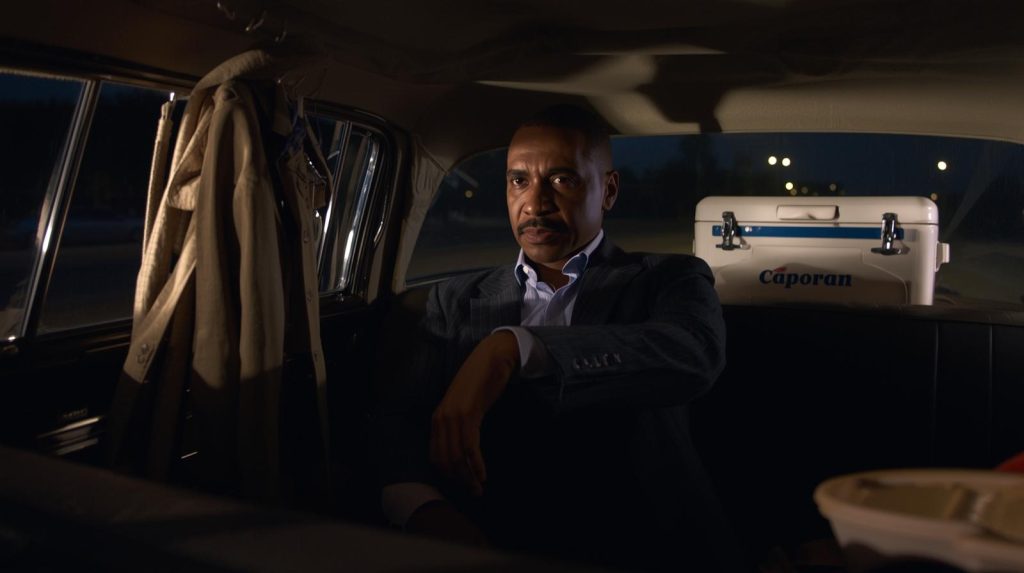
The Night Comedy Finally Opened the Door
What kept Steve Harvey from quitting during those impossible years was not comfort, because he had none, but a deep refusal to surrender after losing so much. One of the lowest moments came after a show in Florida when a promoter refused to pay him that night, leaving him without money for food or gas. Harvey broke down in his car and prayed for a way out, believing he could not continue much longer. Then the opportunity that changed everything finally arrived. A call came from Showtime at the Apollo, one of the toughest proving grounds in entertainment, where audiences were known for rejecting performers without mercy. Harvey borrowed money just to get there, knowing this was the kind of chance that might never come again. When he got on that stage, the years in the car, the stutter, the doubt, the rejection, and the isolation all collided into a single performance. By the early 1990s, he had become the permanent host of the show, and the man who had once been invisible was suddenly impossible to ignore. That moment did not just rescue him financially; it transformed his entire trajectory and put him on the path toward national fame.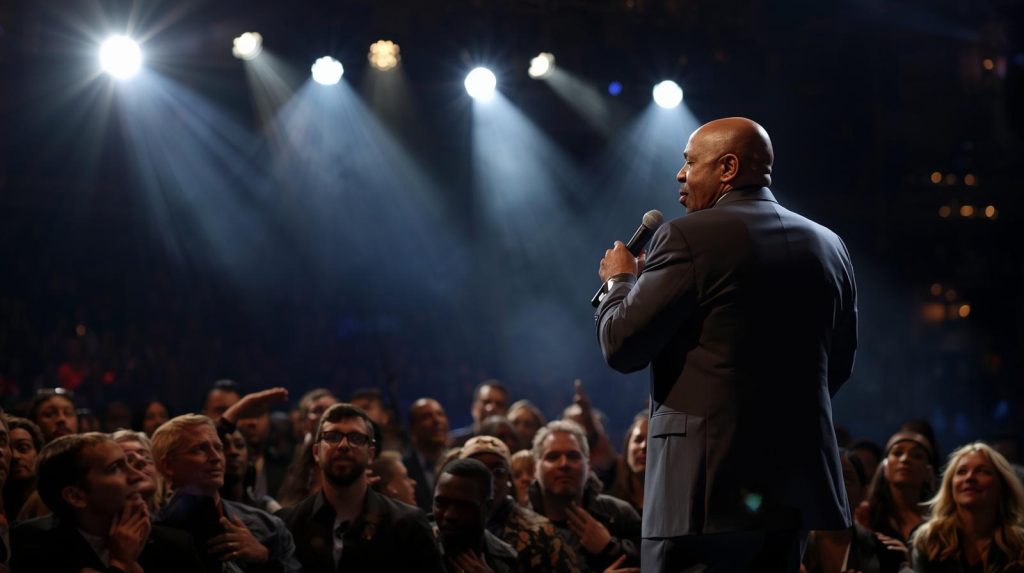
From Comedy Star to Cultural Powerhouse
Once Steve Harvey broke through, he did not stop at survival. He built one of the most remarkable second acts in entertainment history. His sitcom The Steve Harvey Show gave him television stability and mainstream visibility, but his bigger cultural impact came when he helped redefine what live comedy could be through the Kings of Comedy tour alongside Bernie Mac, Cedric the Entertainer, and D.L. Hughley. That tour proved comedians could fill arenas like music superstars, changing the economics of comedy in the process. Still, Harvey’s greatest business strength was not just performing, but reinvention. When many entertainers would have faded into nostalgia, he pivoted into radio, where his morning show connected him deeply with everyday listeners, especially women seeking blunt relationship advice. That success led to Act Like a Lady, Think Like a Man, a bestselling book that turned him into a different kind of cultural voice altogether. Then came Family Feud, a job many people warned him against taking because the show seemed tired and irrelevant. Harvey ignored them, brought his comic instincts into the format, and transformed it into one of the most successful syndicated shows in television. His genius was not merely talent; it was knowing when to evolve and having the courage to do it publicly.
The Broken Marriages and the Woman Who Changed His Life
For all of Steve Harvey’s public authority on relationships, his personal life was marked by years of instability, regret, and emotional wreckage. His first marriage produced children he loved, but his pursuit of comedy and survival pulled him away from home so completely that he was absent from much of their upbringing. His second marriage coincided with his rise to stardom, but it too eventually unraveled in a bitter and expensive divorce that left emotional damage far deeper than the financial cost. The irony was harsh: the man who could read a room, command an audience, and advise millions on love could not build peace in his own home. The turning point came through Marjorie, a woman he had met years earlier in a Memphis comedy club and instantly declared he would marry someday. At the time he was too broken and unstable to build a life with her, and they lost touch for years. But after his second divorce, he found her again, and their reunion changed him profoundly. Marjorie did not simply become his wife; she helped reshape his identity, soften his image, and ground him emotionally. With her, Steve Harvey finally stopped running, and for the first time, the man who had spent decades chasing success began learning how to live with peace.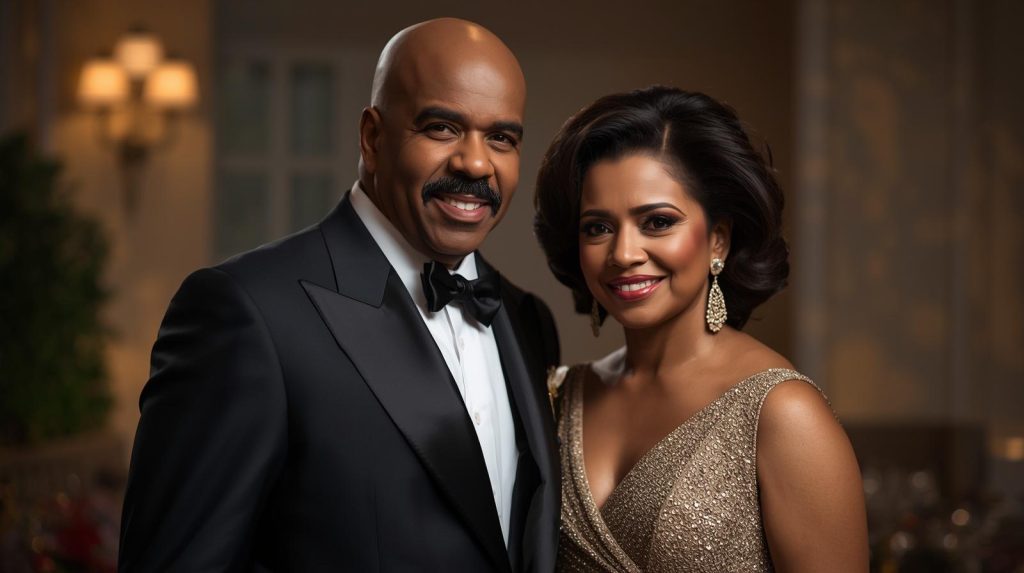
Why Steve Harvey’s Story Means More Than Fame
What makes Steve Harvey’s life story so powerful is not the money, the ratings, or the fame, but the way he turned pain into purpose. He often speaks about faith, risk, and what he calls “the jump,” the terrifying moment when you leave safety behind and trust that your life can become something greater. For Harvey, that message carries weight because he actually lived it. He did not speak from theory but from scars. He knew what it felt like to be laughed at, to be unwanted, to go hungry, to fail publicly, and to sit alone wondering whether God had forgotten him. That is why his later success as a mentor matters so much. Through programs for fatherless boys and public speeches about courage, discipline, and belief, he gives away the blueprint he fought so hard to build. Steve Harvey’s real legacy is not just that he became rich or famous, but that he became living proof that a person can begin in humiliation and still end in purpose. The boy who could barely speak became one of the most recognizable voices in America, and the man who once slept in a car now spends his life telling other people not to let the world decide what they are worth.