A Routine Flight Over a Frozen World
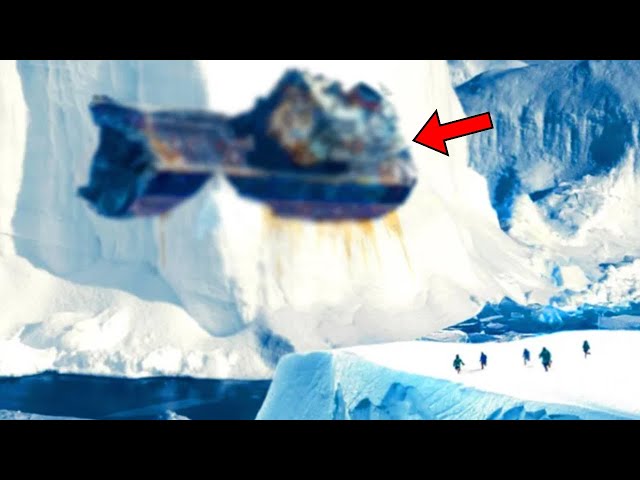
In April, NASA scientist Chad Green was flying aboard a Gulfstream III over northern Greenland, focused on monitoring a radar instrument designed to study the ice sheet. From the aircraft window, he casually photographed the vast white landscape below—nothing unusual at first glance. The mission wasn’t about discovery, but about testing technology. Yet one image would soon reveal something no one expected.
An Image That Revealed the Impossible
When the data was reviewed, strange geometric patterns appeared beneath the ice—too organized to be natural. Radar scans hinted at structures buried deep below the surface. What looked like abstract lines soon resolved into tunnels, corridors, and chambers. The ice wasn’t empty. It was hiding something massive.
The Cold War City Under the Ice
Scientists soon realized they had uncovered Camp Century, a secret U.S. military base built in 1959 during the Cold War. Constructed by the U.S. Army Corps of Engineers, the base was carved directly into the Greenland ice sheet, forming a network of tunnels once described as a “city under the ice.” Abandoned in 1967, it was slowly buried by decades of snowfall and shifting ice.
Why Camp Century Vanished
When Camp Century was shut down, it was assumed the ice would permanently entomb it. Over time, nearly 100 feet of ice covered the facility, disguising it completely. For decades, it existed only in old military records and fading Cold War history—until modern radar technology made it visible again.
Technology That Changed Everything
The breakthrough came from NASA’s UAV SAR—Uninhabited Aerial Vehicle Synthetic Aperture Radar—mounted on modern aircraft. Unlike older surveys, this system created detailed, multi-dimensional maps of the ice’s internal layers. For the first time, individual buildings and tunnels inside Camp Century could be clearly seen beneath the ice.
A Discovery With Serious Consequences
The rediscovery raised urgent questions. Scientists are now using radar data to predict when melting or thinning ice could expose the buried base again. Camp Century may still contain radioactive material and chemical waste left behind decades ago—posing environmental risks if released. What was once hidden for safety may not stay buried forever.
Found by Accident, Important for the Future
Ironically, Green and fellow scientist Alex Gardner weren’t searching for Camp Century at all. Their goal was to understand ice thickness and internal layers to better predict sea level rise. Without accurate ice data, forecasting Earth’s future becomes impossible. These April test flights are now opening a new era of mapping in Greenland, Antarctica, and other unexplored frozen regions—where more forgotten secrets may still lie beneath the ice.