A Vision Too Large for a Mountain
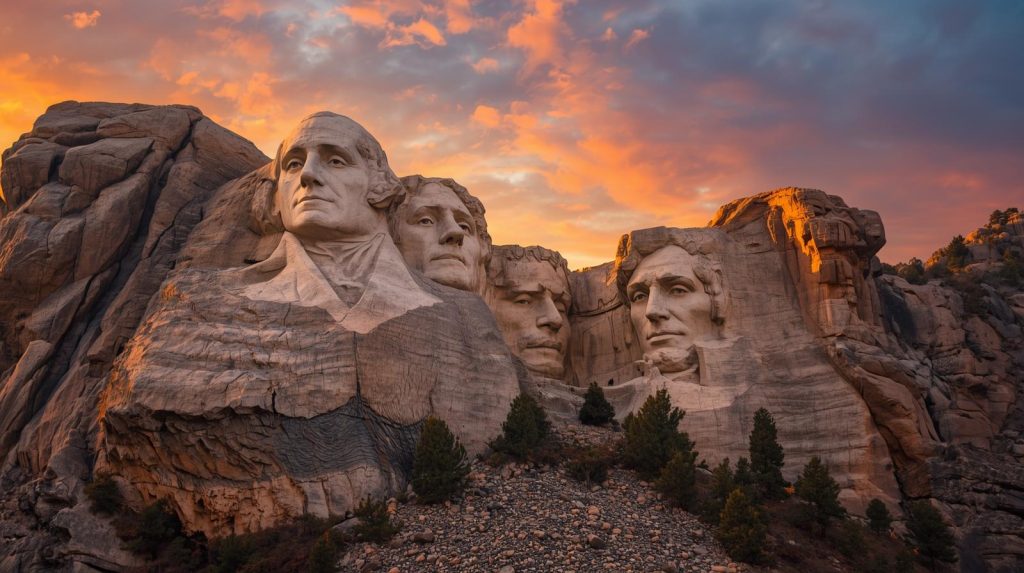
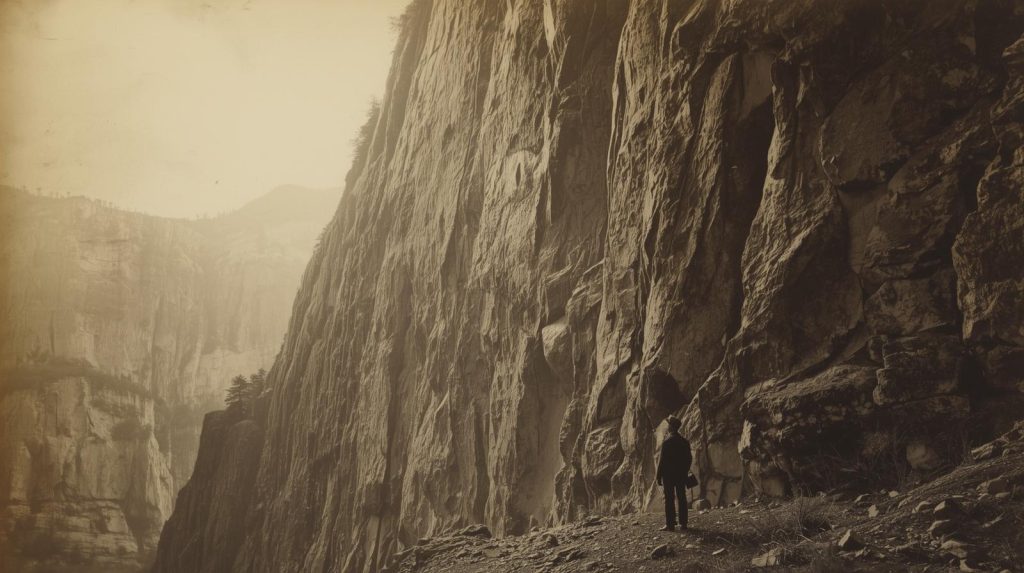
In 1925, sculptor Gutzon Borglum stood before the towering granite face of Mount Rushmore with a vision most people would have dismissed as madness. He didn’t just want to carve figures into rock—he wanted to carve presidents into a 500-foot cliff, transforming solid stone into a national symbol. The idea sounded impossible: scaling a five-foot model into 60-foot faces without error, without modern computers, and without a single catastrophic mistake that could destroy months of work in seconds.
A State Desperate for a Miracle
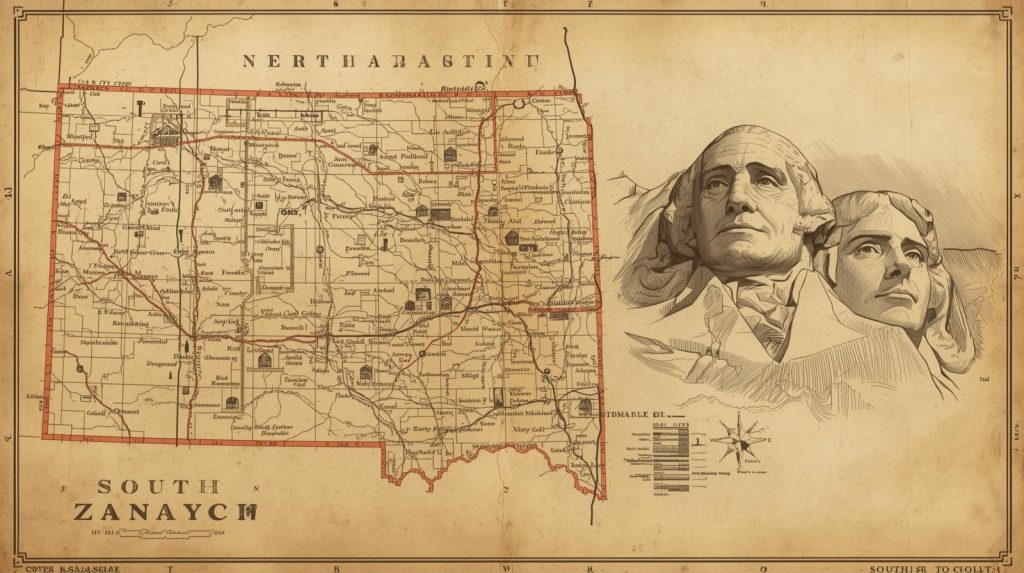
South Dakota in the early 20th century was struggling. Towns were shrinking, young people were leaving, and economic growth seemed to bypass the region entirely. Historian Don Robinson believed a monumental attraction could change everything—a structure so grand that tourists would travel across the country to see it. When Borglum rejected the idea of carving Wild West figures and insisted on presidents instead, the project transformed from regional pride into a bold statement of national identity.
Four Hundred Men With Nothing Left to Lose
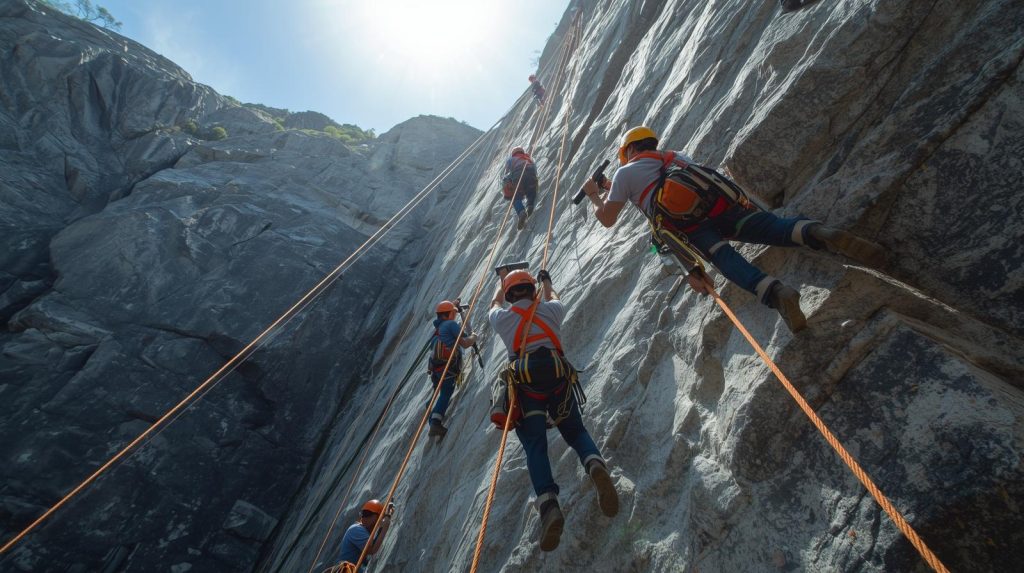
When construction began in 1927 and the Great Depression struck soon after, Mount Rushmore became more than a monument—it became survival. Miners, farmers, and laborers who had lost their livelihoods arrived seeking fifty cents an hour. They weren’t trained sculptors; they were fathers and sons hanging hundreds of feet in the air, gripping ropes while operating 30-kilogram jackhammers for hours at a time. For many, the risk of falling was terrifying—but the risk of going home empty-handed was worse.
Building a Village on the Side of a Cliff
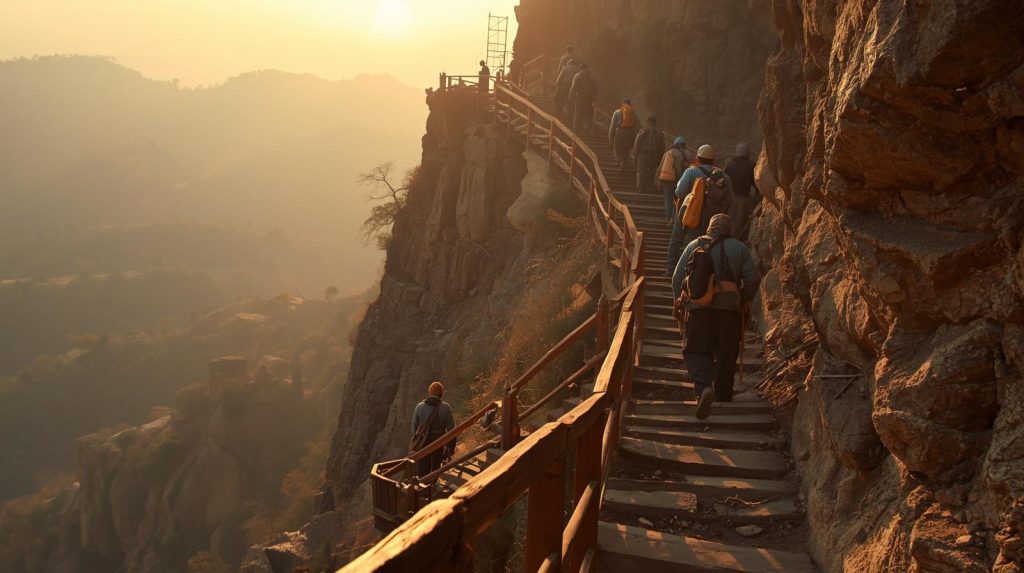
Before any presidential face could emerge, the mountain itself had to be tamed. Roads were carved upward, a small settlement of tool shops and housing appeared at the base, and a 504-step wooden staircase was hammered directly into the mountainside. Massive air compressors powered jackhammers through thousands of feet of pipe. Each morning, men climbed those steps knowing the danger ahead, and yet, against all odds, not a single worker died during the 14-year project.
The Machine That Made the Impossible Precise
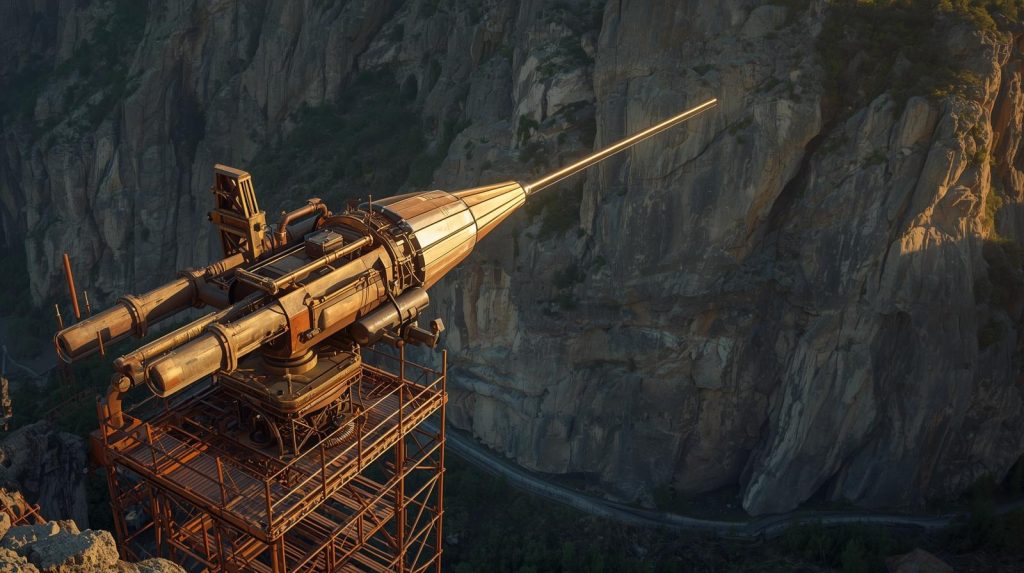
Borglum’s greatest challenge wasn’t just carving—it was scaling. A minor error on the mountain would mean irreversible damage. So he invented a giant pointing machine, a device capable of measuring three-dimensional coordinates from his small model and transferring them—multiplied by twelve—onto the granite face. Thousands of measured points guided each drill. Workers created honeycomb patterns in the rock, allowing stone to break away precisely where intended. It was innovation born from necessity, engineering meeting artistry on an unprecedented scale.
Eyes That Would Look Across Centuries
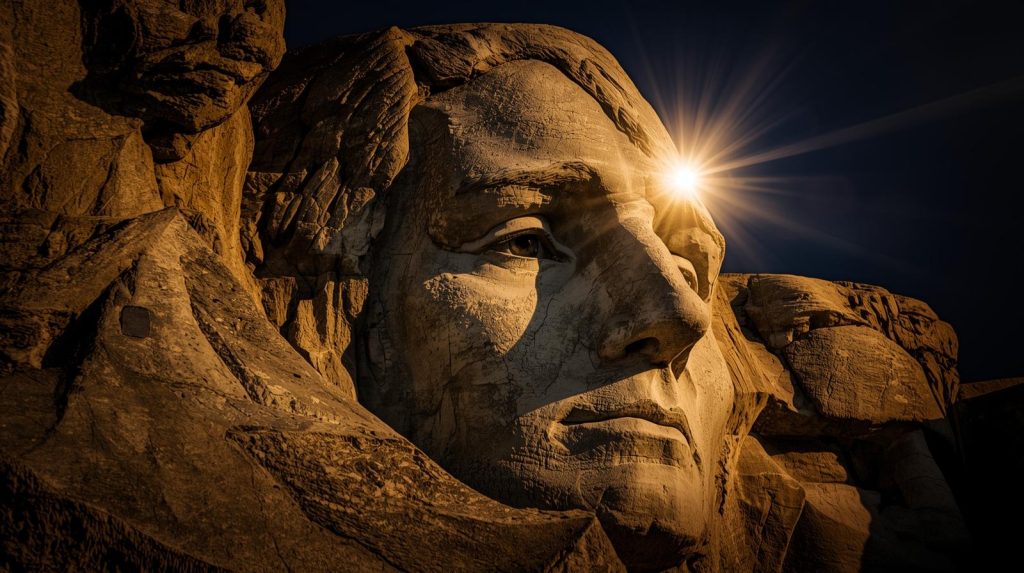
Borglum refused to carve lifeless faces. He wanted eyes that appeared aware, reflective, almost conscious. To achieve this illusion, deep recessed pupils were left in shadow, with small polished sections catching sunlight to simulate a glint. Carving these eyes required extreme precision and nerve—workers hung in the most dangerous positions imaginable, drilling into fragile sections where one fracture could mean disaster. Yet they completed them, and those eyes now gaze across generations, frozen in granite yet somehow alive.
An Unfinished Dream That Still Endures
Borglum envisioned more—figures carved to the waist and a hidden Hall of Records behind the monument containing America’s foundational documents. But World War II drained resources, and in 1941 Borglum passed away before seeing his full vision realized. Funding ran dry soon after, and the tools fell silent. Mount Rushmore remains unfinished, yet its impact is undeniable. It turned South Dakota into a destination and stands today not just as a tribute to four presidents, but to 400 ordinary men who risked everything to carve an impossible dream into stone.